September 21st, 2008 by Carol Ferndale · 4 Comments

Do you know that one of the most expensive hotels ever built, The Emirates Palace, in Abu Dhabi, offers the ultimate package holiday, coming in at a cool one million US dollars? So while we tear our hair out over the credit crunch, just cast your eye over this little lot, while you dream, drool or rant.
The package is for two people and includes:
- First class return tickets from any international destination serviced by Etihad Airlines to Abu Dhabi
- Seven nights in a 680 square metre Palace Suite at Emirates Palace on an all-inclusive basis.
- A chauffeur driven Maybach at your disposal every day of your stay
- Daily spa treatment at the Anantara Spa
- A day trip in a private jet to Iran to create your very own Persian hand-made carpet from a very exclusive carpet maker
- A day trip in a private jet to the Dead Sea, which includes an afternoon Anantara spa treatment in the Kempinski Hotel Ishtar
- A day trip to Bahrain in a private jet to go deep sea diving for pearls. You then get your pearl set in specially designed and exclusive jewellery settings
- A game of golf at the Abu Dhabi Golf Club
- You get to make your own perfume with experts from YAS Perfume
- Gifts including the rarest pearls in the world from Robert Wang and a selection from Holland & Holland Sporting Guns
So there we have it. If you like pearls, perfume, golf, private jets, and have a million to spare, it could be just the thing.
Tags: General · United Arab Emirates
September 9th, 2008 by Carol Ferndale · 2 Comments

Well, it had to happen, didn’t it? If you are fed up with the planet Earth altogether, and really want to get away from it all, now you can even escape off up into space. Not very far, and not for very long, but just enough to see with your own eyes that the Earth really is round, and that space is dark and infinitesimal.
On the Go Tours specialise in group and tailor made tours that combine a mix of culture and adventure, and now they offer three new packages from Russia that give you the opportunity to take a ride in a centrifuge, experience weightlessness in an aircraft, and the unbelievable opportunity to take a look at the Earth from space.
Star City Centrifuge, is a mobile cab at the end of a long arm which goes round and round at high speeds, providing a thrilling seven minute experience where you are subject to such a g-force that you feel as if you are several times your normal weight. The centrifuge can also be used to create the sensation of weightlessness. It is centrifuges such as this that are used in the training of cosmonauts and military pilots.
If you want to experience more of being weightless, then why not try Star City Zero Gravity, which is a 1.5hr flight with experienced instructors which gives you a total of six minutes of zero gravity during the flight. Using the same method that was used to train cosmonauts, you achieve this in an aerobus IL-76 MDK aircraft which ascends sharply at a 45 degree ‘nose high’ angle, levels, and then starts to descend. At this point in the flight you experience apparent weightlessness for some 20 – 25 seconds. This happens fifteen times during the flight giving you a total of six minutes of floating around.
But perhaps the ultimate package is Space Flight, where you take an amazing flight up to the point where the atmosphere ends and space begins. You depart from a military airbase in Nizhny Novgorod which is a 1hr 20m transfer by plane from Moscow, and go up in a MIG-29, one of the most advanced planes in the Russian Air Force, with turbojet engines, great aerodynamics and a wonderful view from the cockpit. This thrilling 30 minute flight will actually bring you to the boundaries of space.
Yes indeed, this has to be the ultimate escape.
Star City Centrifuge and Star City Zero Gravity each cost £2,979. Space Flight comes in at £14,979 per person.
Tags: Russia · Space
August 5th, 2008 by Carol Ferndale · No Comments
It was great to see Nelson Mandela in London at the end of June for his 90th birthday celebrations, with a concert in London’s Hyde Park, which raised funds for his AIDS/HIV charity, 46664. Some 50,000 people turned up to see performers such as Amy Winehouse and Queen.
In case you are wondering why Mr Mandela’s charity is named 46664, this was his prisoner number when he was on the infamous Robben Island. Being convicted at the Rivonia Trials in 1964, he became prisoner number 466/64, and spent 27 years behind bars for taking a stand against South Africa’s evil apartheid regime.
Here in the UK, as part of a celebration of Nelson Mandela’s birthday, a few weeks ago BBC4 did a special night of TV programmes about South Africa, and about the struggle. One of the programmes I managed to see was “Storyville - Sophiatown Surviving Apartheid”, followed by one about Robben Island, “Voices from the Island”.
“Sophiatown Surviving Apartheid” was a documentary, liberally sprinkled with some fine examples of South African jazz music, documenting the life of Sophiatown, a neighbourhood of Johannesburg, which became renowned for its multiculturalism in the midst of the worst years of the apartheid regime. Throughout the forties and fifties Sophiatown was home to musicians, artists, and writers, becoming a haven for integrationist politics. Sophiatown was the place where Nelson Mandela spent his formative years, and other former notable residents include Trevor Huddleston and Hugh Masekela. The documentary includes interviews with some of Sophiatown’s foremost residents, as well as archive footage. Sophiatown’s very presence aggravated the apartheid government, who could not bear to see this oasis of tolerance flowering in the midst of whites-only suburbs. And so in 1955 2,000 policemen forcibly removed the families of Sophiatown to Soweto. Sophiatown was then flattened, and a whites-only suburb named Triomf built in its place. The documentary shows tragic footage of the buildings of Sophiatown being torn down by bulldozers.
The name Sophiatown was officially restored in 2006. If you travel to Johannesburg, be sure to pay Sophiatown a visit, and see the fabulous murals which depict the life of the suburb in those days of survival.
Many of those who struggled against apartheid ended up as political prisoners on Robben Island, located in Table Bay, some seven kilometres off the coast of Capetown Bay. “Voices from the Island” is a thoughtful documentary, where Nelson Mandela and his fellow ex-prisoners recall their incarceration on the infamous island. For three decades Robben Island housed not only political prisoners, but also regular convicts, a leper community, and the mentally ill. On the island, enduring deprivation, Nelson Mandela and his fellow political prisoners devised strategies for survival, and their lives became transformed as a new South Africa began to take shape.

Those who have served time at the prison on Robben Island refer to it simply as “the island”, and one former political prisoner related to me stories of his time there, and how he and his comrades survived. He told me how he and his fellow prisoners would volunteer for light maintenance work on the island. Once outside the prison, some of them would get the guards talking about anything, on any subject that wasn’t to do with politics, one popular topic being football. Once the guards were thus occupied, others would disappear, and go fishing to supplement the meagre Robben Island diet, while others would trawl through any garbage they could find for newspapers. Getting hold of newspapers was key - once paper was found, translations would be done as necessary, and the news passed around to all the prisoners.
Robben Island is now a musuem, so if you find yourself in Capetown, don’t forget to visit Robben Island Museum, and to remember those who fought for freedom.
Tags: Africa · South Africa
July 15th, 2008 by Carol Ferndale · No Comments

Summer is supposed to be here, but there is a bit too much rain for my liking, so what could be better than thinking about a change of scene? Rain or shine, in a city there is so much to do, and a rather neat site I have found offering short breaks is directline-citybreaks, who do some cool escapes to some really exciting cities.
You can enjoy the canals and bridges of Amsterdam, take in the hot nightlife of Barcelona, sip a Guinness in Dublin, listen to bagpipes in Edinburgh, stroll around the fabulous art museums of Madrid, have a romantic time in Paris, glide through Venice on a gondola, view ancient Roman sights with one of the many Rome city breaks, or choose from many other popular city break destinations such as Brussels, Budapest, or Prague. And if you feel like going slightly more off the beaten track, why not try the cool Scandinavian sophistication of Stockholm, the year-round warmth of Singapore, or the buzzing streets and fabulous temples of Bangkok?
A couple of minutes browsing and I found three nights bed and breakfast in Prague at the Quality Hotel, for a mere £229 per person including flights from Gatwick. Three nights bed and breakfast at the Artemis in Amsterdam came in at £324 per person, including flights from Stansted.
Regional UK airports are available as well, and some breaks can be done by the Eurostar.
Not only are there great offers, but the site is a mine of information about the cities themselves, including a comprehensive set of city guides, which give general information on a city, how to get around, and things to do. This makes the site a real one-stop shop, with all the information you need, along with booking at a couple of mouse clicks.
directline-citybreaks is certainly a site I will be coming back to.
Tags: Uncategorized
July 7th, 2008 by Carol Ferndale · 2 Comments

If you are looking for a half-board package and considering Turkey, you may find that most of the deals are listed as bed and breakfast holidays. Fear not! Most of the Turkish hotels allow you to upgrade to half-board basis, and this can be done in advance, with a few mouse clicks.
It tends to be assumed that, when booking a holiday to Turkey, people have a preference for bed and breakfast basis, due to the high number of top quality eateries found in most resorts, and therefore the packages are mostly advertised on that basis. However the hotels themselves do stunningly good meals, and you can cut the cost of your holiday in Turkey dramatically by booking half board in advance. This usually costs around £6 per evening meal per person, added onto the overall package cost, which represents exceptional value for money. For this mere six quid you get the traditional Turkish all-you-can-eat meze, which is a range of fresh and healthful salads, including hummus, green salads, carrot salad, cheese, egg, aubergine salad, bread, and so on. You will easily find that this is a meal in itself, and you have to be careful to save room for the main course! The main is usually a meat or fish dish, served with rice or potatoes, and then you have a delicious Turkish dessert, such as baklava made from pastry and pistachio nuts.
Going half-board means that your meals are sorted already, (with the huge breakfasts and dinners you don’t really need a lunch), allowing you to keep your holiday well within budget, and you are not spending half the night trying to decide where to eat. However, you can still have the odd evening meal out, if you feel like it. The downside might be if you are not keen on the hotel food - but to be honest, I have yet to come across a Turkish hotel where I did not like the food! And I have stayed in a few of them. I find that the hotels have the resources to lay on a really great spread - they each have their own resident chefs, most of whom make bread and sweets on site as well.
And what’s my current top tip in terms of a package to Turkey? If you happen to be in the north of England, flying from Doncaster-Sheffield Airport, then one of the best deals around at the moment is offered by Thomson Holidays, two weeks at the Oykun Hotel in Calis Beach, on Turkey’s Lycian coast, on a bed and breakfast basis, for £358 per person. When you have added in supplements, in-flight meals, etc, this comes to a staggering £744 for two people, not including insurance. Make it half board, and it comes in at £912 for two people, for two weeks, which I think is pretty good value for money.
This is definitely the hot deal that I would go for at the moment. I have stayed in the Oykun, and found it to be an excellent family run three star hotel. It has the benefit of two swimming pools, plus plenty of areas to sit in either the shade or the sun. It has a cool and comfortable café/bar area that is open most of the time. It’s also brilliant to have a pool table, where I took the opportunity to brush up my game, and even beat my partner who thinks he is pretty hot at pool. The hotel even has a bowling green! The Oykun is about a ten minute walk to the sea - up the road, over the river, and there you are on the promenade of Calis Beach.
The only glitch about the Oykun which we found was that you can’t adjust the temperature of the air conditioning yourself - you have to get the staff to come and do it, so this meant a couple of nights sleeping with the cooler set too low, which necessitated getting in and out of bed like a jack-in-the-box to turn it on and off.
The Oykun is owned and run by a very friendly and professional couple and their son, and the staff are a really kind and helpful bunch too.
If you take the same holiday from a London airport, it is about £100 per person more expensive! Supply and demand, I guess.
Calis Beach is just a ten minute dolmus ride away from Fethiye, with its fabulous shops and market, and from Fethiye it is just a short hop to the mountain resort of Ovacik, lively Hisaronu, the seaside resort of Olu Deniz, with its blue lagoon, or the exciting ghost town of Kayakoy, with Bohemian shops and boutique cafés about its fringes.
Anyway, I hope that the credit crunch is not dealing to badly with your holiday budget - Good Luck in your search for great deals this summer!
Tags: Hotels · Mediterranean · Turkey
July 3rd, 2008 by Carol Ferndale · No Comments

Coming out of Birmingham on the 35 or the 50 bus, you go out through Moseley, then through Moseley Village, (which is rather Bohemian and lively, and worth a visit in its own right), before coming into Kings Heath. Kings Heath was once a village, which slowly got swallowed up by the expanding conurbation of Birmingham. Residents who have lived in Kings Heath a long time still talk about “going into the village”, although nowadays, Kings Heath is a fairly typical suburb. However, It does have one or two odd corners that are worth looking at if you happen to be in the area.
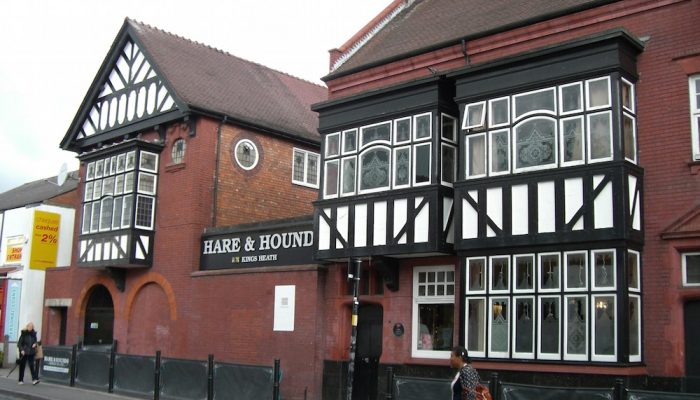
On the corner of York Road and High Street you have the fine Victorian pub, the Hare and Hounds, which was where British reggae band UB40 played their first ever gig in 1979. There is still live music here, such as Brum indie rock bands The Twang, and Editors.
Going down York Road you will find a number of small cafes, including the York Café, and the Christian-run Cornerstone Café where you can get a good latte.
Hungry? York Road has plenty of restaurants doing tasty food, such as Byzantium, a rather neat little tapas restaurant, where you can get not just Spanish-style tapas, but also offerings of a more eastern nature, such as tabbouleh, hummus, taramasalata, and delicious kebab-style dishes.
York Road also has Kings Indian Dining, regarded by the Curry Club as one of the top balti restaurants in the country.

Rather impressive also is the Kitchen Garden Cafe, which is a café, a deli, a restaurant, and an organic garden shop - where you can buy plants, garden accessories, books, toys and various other stuff. This is a really pleasant place to while away a few hours sipping coffee, or eating something good from the deli, while sitting out in their lovely walled garden, surrounded by plants and interesting garden decorations.


Moving away from food, another interesting place to take a look at on York Road is vintage clothing store Top Banana, which has a fine array of fifties, sixties and seventies classic Americana, from Hawaiian shirts to mini-dresses. from colourful sneakers to sleek leather jackets.

Further up the High Street, and on your right you will find the wide open spaces of Kings Heath Park, with its pond complete with fountains, its gorgeous flowers, and people on skates.


Kings Heath still retains much of its village character, while at the same time having all the amenities that Birmingham has to offer.
Tags: Britain · England · Europe · UK
June 5th, 2008 by Carol Ferndale · 2 Comments

Probably well off the tourist trail is the industrial city of Birmingham in the Midlands, which is affectionately known simply as “Brum”, and is a thriving multicultural metropolis.
Birmingham started out as a small Anglo-Saxon farming village dating back to the 7th century, and it is mentioned in the Domesday Book of 1086. By the 12th century it had become a market town, and the market area was known as the Bull Ring, which is now a well-known central part of the city. With the arrival of the Industrial Revolution, Birmingham was already known for its gun making, and from then it grew rapidly into a major industrial center, earning it the title of “the workshop of the world”. It also became known for its jewellery making. Birmingham still has the feel of its gritty industrial past, and in many ways may not be as twee or picturesque as some English cities. But Birmingham is now on a program of urban regeneration, with many new and eye-catching buildings springing up, such as the Future Systems’ Selfridges building.
Birmingham has two universities: the older University of Birmingham, founded in 1900, which provides a full range of academic subjects; and Aston University, founded in 1966, which has more of an industrial focus, reflecting the nature of the city. The presence of two universities in the city means that Birmingham has a lively student social scene, with clubs such as Snobs for indie, rock and retro sounds, and The Works providing house and garage music.
On the cultural side, Birmingham Museum and Art Gallery has a fine collection of Pre-Raphaelite paintings, and there is a Museum of the Jewellery Quarter which was a former jewellery workshop.
If you are looking for somewhere to eat in Birmingham, then I can definitely recommend the Rajdoot Tandoori on George Street, where I have enjoyed an excellent meal of authentic North Indian cuisine. It is also recommended by Egon Ronay. The Rajdoot serves lean poultry and meat soaked in lovely spices and sauces, as well as spicy salads with plenty of coriander leaf, and vegetable dishes such as brinjal bajee, (aubergine/egg plant). They also serve the renowned Indian Kingfisher beer. The Rajdoot is a little on the expensive side, but stands well above most high street Indian restaurants in terms of quality, service, decor and ambience.
Birmingham may be a little off the usual tourist track, but it is full of pleasant surprises and well worth a look.
In my next post we will take a peek at Birmingham suburb Kings Heath.
If you are looking for somewhere to stay in Birmingham then you could take a look at The Holiday Inn Hotel in Birmingham City, which is only five minutes walk from Birmingham New Street Train Station.
Tags: Britain · England · Europe · UK
May 29th, 2008 by Carol Ferndale · No Comments

As well as an Introduction to the Trans-Siberian Railway, I have already discussed the Trans-Siberian railway proper, which is the Moscow-Vladivostok route, and the Trans-Mongolian alternative, more popular with the tourists, that goes via Mongolia to Beijing.
The third and final alternative for crossing Eurasia is the Trans-Manchurian route from Moscow to Beijing. This train, known as the Vostok, takes just over six days to cover the 5,623 mile route (8,986km) from Moscow to Beijing, and follows the same route as the Trans-Siberian as far as Tarskaya, from where it goes on to the Russian border town of Zabaikalsk, after which it crosses over into China, and continues on to the Chinese border town of Manzhouli. Crossing the Russia-China border takes the best part of a day, as they hoist the train and carriages up and change the bogies, (these are the frameworks of wheels, axles and suspension), so they fit the new track gauge. Taking photos at this time is not a good idea, unless you want to get into a load of trouble with the border police.
Having been adapted to the new gauge, the train then continues on to Beijing, passing through Harbin and Changchun.
You have the option of 2nd class compartments with four berths, known as kupe, or a 1st class compartment with only two berths, known as spalny vagon. The prices for this route are similar to those for the Trans-Mongolian route.
People who have taken this route report that the Chinese food is really good, but that the Russian food bears an uncanny similarity to English school dinners from way back when, making that border crossing even more significant!
With its fabulous architecture of Russian and European influence, Harbin is one of China’s most beautiful cities, and I think I would find it hard to go through this neck of the woods without making a stopover. Harbin is certainly an ideal place to break journey before continuing on to Beijing.
For a very frank account of travelling this route in wintertime see Last Train to Lhasa, which gives some very eye-opening descriptions of some of the characters one can meet on the train.
When considering your trans-Siberian adventure, and which of the three possible routes to take, you would be well advised to take a look at The Man in Seat Sixty-One … which is full of useful information about the journey, how to buy tickets, and so on, as well as a cornucopia of information about world train travel generally.
Tags: Asia · China · Europe · Japan · Russia · Trains
May 22nd, 2008 by Carol Ferndale · 1 Comment

I have already talked about the Trans-Siberian Railway generally, and about what might be called the Trans-Siberian proper, which is the Moscow-Vladivostok route. However, a route which tends to be more popular with the tourists is the Trans-Mongolian. This route is the same as the Trans-Siberian as far as Ulan Ude, where it departs from the main Trans-Siberian line, going on to Ulan Bator, before crossing the Gobi Desert, and then going on to Beijing.
This route goes past the shores of Lake Baikal, giving the most stunning views to the passengers. If you want to spend longer on the shores of Lake Baikal, then get out at Irkutsk to do a bit of exploration. About one hour’s car drive away from Irkutsk is the popular lakeside town of Listvyanka, which has accommodation ranging from posh hotels to dorm rooms, as well as bed and breakfast with local people.
A number of tourists doing the journey choose to stop over in Ulan Bator for sightseeing, before finally travelling on to Beijing. Ulan Bator is a relatively plain city, but there are some good examples of interesting Mongolian architecture, such as the Gandan Khiid Monastery.
Some tour operators sell Trans-Mongolian packages with the option of stopping over en route to stay in traditional Mongolian tents, known as yurts, or camp by the shores of the lake.

People who have done the Ulan Bator-Beijing stretch of the journey in January say that the winter views are really magnificent, and the train warm and cosy. The Gobi Desert covered in snow is spectacular, and the train makes its way past massive herds of wintering gazelle and the occasional, isolated yurt, with wisps of smoke coming out of its chimney. Mongolia has a certain ethereal beauty in winter, and passing through this by train is quite magical.
Over the course of the journey, the restaurant car changes from Russian to Mongolian, and then to Chinese, providing a wonderful variety of food over the six days that it takes to make its way from west to east.
There are four-berth compartments available at either first class, or second class, as well as deluxe two-berth compartments with shared shower. Reports suggest that getting these slightly posher compartments are well worth the extra cost, and that they have very comfortable beds.
With prices ranging from £180 to £260, this is a really cheap way to get to China, and to have an adventure while doing it.
Beijing is a wonderful destination, with lots to see, and you are a mere overnight trainride away from the wonderfully fashionable metropolis of Shanghai. From Shanghai you can continue your journey by taking a ferry to Japan.
The Trans-Mongolian is considered by many to be one of the most enjoyable ways to cross Eurasia by land. It certainly seems to be a popular and well-loved route amongst aficionados - people who have done the Trans-Mongolian report that even though it is five to six days of sitting on a train, there is never a dull moment and always something to do. There is always plenty to see out of the window, interesting people to talk to, meals to be eaten, and beverages and alcoholic drinks to be had. The travellers get to know one another fairly quickly, aided by that informality and bonhomie so often found amongst international travellers. As a result, there is usually a bit of a party going on somewhere on the train each evening. If you can afford the time, I really can’t think of a better way to go from Europe to the Far East.
Tags: Asia · China · Europe · Mongolia · Russia · Trains
May 8th, 2008 by Carol Ferndale · No Comments

In my Introduction to the Trans-Siberian Railway, I spoke of the three possible routes that can be taken. Today I want to focus on the Moscow – Vladivostok route.
It is the Moscow to Vladivostok route that is the Trans-Siberian Railway proper, as opposed to the two other trans-Eurasian routes that end up in Beijing. The main route of the Trans-Siberian starts at Moscow, passing through Chelyabinsk, Omsk, Novosibirsk, Irkutsk, Chita, Blagoveshchensk, Khabarovsk, before finally pulling into Vladivostok. This route takes seven days and covers an impressive 6,152 miles.
The train, called the Rossiya, is a busy train, and there are people getting on and off at each stop, with just a few people making the full journey as tourists.
Second class travel is in a four berth compartment, and costs about $320 one way. If you feel like a little extra comfort, then you might opt for first class travel at $630 one way, which is in a two berth compartment, with the added convenience of having both beds on the lower level.
Meals in the restaurant car are at a reasonable five dollars or so, but it can sometimes be difficult to get a seat, depending upon the number of passengers on the train at that particular time. There is a Russian samovar at the end of each carriage, which boils water that you can use to make hot drinks and soups, so you are not entirely dependent on the restaurant car for your drinks and snacks.
The train stops several times a day, for around ten to twenty minutes, so this gives you a chance to stretch your legs and take a few photos. At most of the stations there are vendors selling food and drink. The train has carriage attendants, who will generally try to make sure that you are back on the train by the time it sets off again!
In the summer you will find it is almost never-ending daylight, and, conversely, if you go in the winter you will find the daylight hours very short, but the snowy scenes quite magical.
Being Russia’s largest port on the Pacific, Vladivostok is an interesting city to visit in its own right, and from here you can get a ship to Fushiki, Japan which takes around 36 hours.
The Trans-Siberian is a wonderful way to get to the Far East, especially if you are not keen on flying.
Tags: Asia · Europe · Japan · Russia · Trains